Qualcomm Just Bet Its Future on a $60 Billion Amazon Handshake

For a company still best known for smartphone chips, Qualcomm just landed one of the largest data-center bets of the year. The Qualcomm Amazon AI chip deal, announced September 8, could see Amazon Web Services spend up to $60 billion on custom Qualcomm silicon. That figure covers chips, networking hardware and manufacturing services through 2036.

Inside the Qualcomm Amazon AI chip deal

Under the multi-generational co-development agreement, Qualcomm will design customized chips for AWS’s AI infrastructure. Revenue from the partnership begins in Qualcomm’s fiscal first quarter of 2027, the December 2026 quarter, with chips already in production. As part of the arrangement, Qualcomm granted Amazon warrants worth about $4 billion. They cover up to 25 million Qualcomm shares at $161.26 each, vesting as Amazon hits commercial purchasing milestones (Bloomberg).

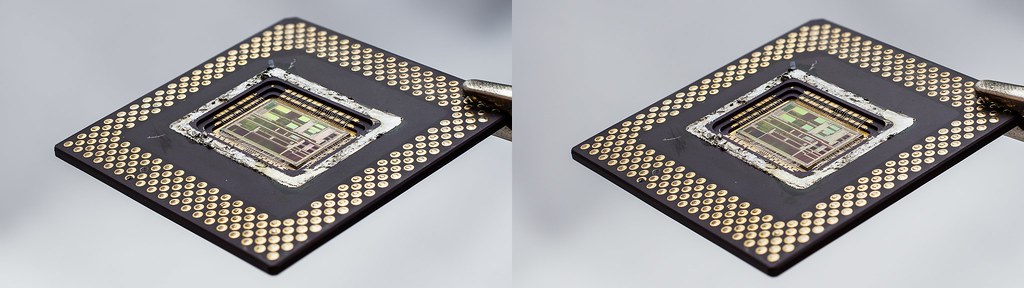
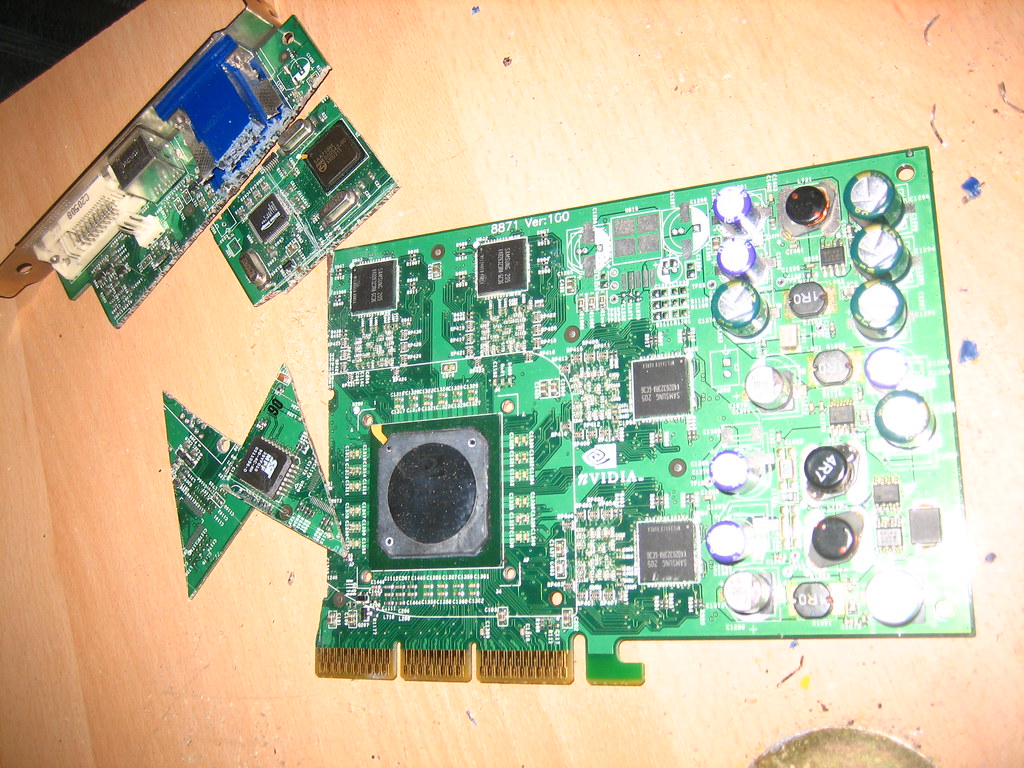
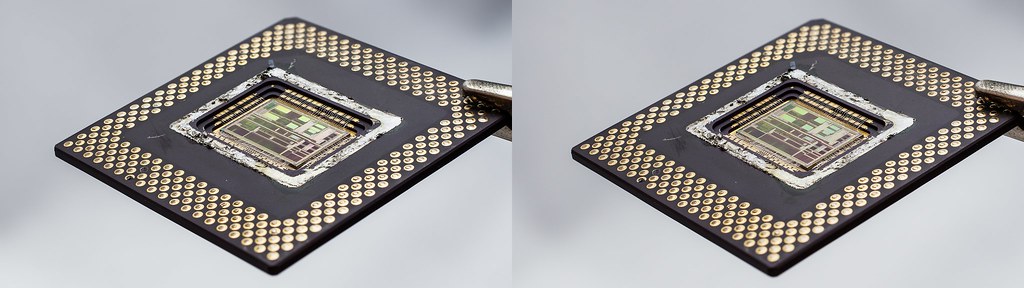
A circuit board with a processor, illustrating the silicon at stake in the Qualcomm Amazon AI chip deal

Why this is Qualcomm’s first Western hyperscaler win

The AWS agreement marks Qualcomm’s first major supply relationship with a Western cloud giant. It is a milestone the company has pursued for years, as it looks to diversify beyond a smartphone market that has matured. Qualcomm shares jumped on the announcement. Investors welcomed the company’s entry into a data-center chip market where Nvidia has dominated throughout the current AI infrastructure boom (Tech Times).

What the deal signals about the AI chip market

Amazon’s willingness to commit up to $60 billion to a second chip supplier suggests hyperscalers are working to reduce dependence on any single vendor. That matters most for AI inference workloads, the computing needed to run trained AI models rather than train them from scratch. The deal covers inference silicon specifically. That is a segment expected to grow rapidly as more companies deploy AI models in production rather than just researching them.

What happens next for Qualcomm and Amazon

The vesting structure means Amazon’s actual spending, and Qualcomm’s warrant payout, depends on AWS following through on purchases over the coming decade. It is not a fixed upfront commitment. Analysts will be watching Qualcomm’s upcoming earnings calls for early signs of how quickly the AWS relationship translates into booked revenue. They will also watch how rivals like Nvidia, AMD and Broadcom respond to a competitor’s growing foothold in hyperscaler data centers.

Chipmakers are competing hard for AI infrastructure contracts right now. See Tamara News’ coverage of Nvidia’s Hugging Face partnership and the ongoing memory chip shortage squeezing the broader supply chain.

Why AWS wanted a second chip supplier

Amazon has spent years developing its own in-house AI chips, branded Trainium and Inferentia. It also relies heavily on Nvidia hardware for the most demanding training workloads. Adding Qualcomm as a third major silicon partner gives AWS more leverage in future price negotiations with its existing suppliers. It also reduces the risk that a single vendor’s production delays or price increases could constrain AWS’s data-center expansion plans. Industry analysts describe the arrangement as part of a broader hyperscaler strategy: diversifying chip supply chains after years of AI-driven demand outstripping available manufacturing capacity.

What the warrant structure tells us about the deal’s real value

Amazon’s warrants only vest as it hits purchasing milestones. That means the headline $60 billion figure represents a ceiling on potential spending, not a guaranteed contract value. This structure is increasingly common in large technology partnerships. It lets both sides commit to a long-term relationship, while tying the financial upside to actual commercial performance rather than upfront promises. For Qualcomm, meeting those milestones over the next decade would mark one of the most significant diversification efforts in the company’s history. It would shift a meaningful share of revenue away from the mobile handset market that has defined Qualcomm for more than three decades.

How rivals are likely to respond

Nvidia, AMD and Broadcom have each built substantial data-center chip businesses over the past several years. None is likely to cede ground to a new entrant without a response. Analysts expect rival chipmakers to lean on their own multi-year hyperscaler deals and software ecosystems. Those remain a real advantage over newer entrants like Qualcomm. Even so, Amazon’s decision to commit a potential $60 billion to a fourth major supplier signals something real. Hyperscalers see value in a wider field of viable AI chip vendors, not just the handful that have dominated the market so far.

Frequently asked questions

  • How much could Amazon spend under the deal? Up to $60 billion on Qualcomm chips, networking hardware and manufacturing services through September 2036.
  • When was the Qualcomm Amazon AI chip deal announced? September 8, 2026.
  • What did Qualcomm give Amazon as part of the agreement? Warrants worth about $4 billion, covering up to 25 million Qualcomm shares at $161.26 each, vesting on commercial milestones.
  • When does revenue from the deal begin? In Qualcomm’s fiscal first quarter of 2027, covering the December 2026 quarter, with chips already in production.
  • Why does this deal matter for Qualcomm? It is Qualcomm’s first major AI chip supply relationship with a Western hyperscaler, helping it diversify beyond smartphone chips.

Sources

OpenAI Just Gave Every Developer the Tools Behind Its Coding Agent

OpenAI opened public beta access to its new Agents API on September 10, 2026, expanding what outside developers can build with its technology. It puts the infrastructure behind its Codex coding agent directly into developers’ hands through a single API call. The OpenAI Agents API lets outside developers build custom AI agents that can run code, browse the web and coordinate their own subagents. They no longer need to build that scaffolding themselves from the ground up.

Software development workspace representing the new OpenAI Agents API

What the OpenAI Agents API Actually Does

According to OpenAI’s own announcement, the API brings the same harness and infrastructure that powers Codex to any developer through a flexible interface. Inside a running session, an agent built on the API can execute code, edit files, search the web, apply predefined skills, and produce artifacts. It can also split tasks across subagents up to a set concurrency limit. Those capabilities previously required developers to assemble their own agent infrastructure from scratch.

How the Architecture Is Built

The API is organized around four core objects, as detailed by MarkTechPost’s technical breakdown. An Agent object defines the model, instructions, tools and any connected MCP servers. An optional Environment sandbox handles isolated execution. A durable Session persists state, and a stream of events reports what the session is doing as it works. Developers can run that compute inside an OpenAI-managed sandbox, on their own infrastructure, or through a partner sandbox. Integrations are already live from Cloudflare, DigitalOcean and Oracle.

Why This Matters Beyond Coding Tools

Codex itself remains a specific product aimed at software development. Exposing its underlying harness as a general-purpose API changes that. Developers outside the coding-tools space can now build agents for customer support, research or data analysis. Any workflow that benefits from an AI system capable of taking multi-step action, not just answering questions, is now a candidate. That positions OpenAI more directly against agent-infrastructure offerings from rivals racing to give developers similar building blocks.

Developer writing code that could integrate with the new OpenAI Agents API

What Comes Next in the Beta

The Agents API launched with pay-per-use pricing based on tokens and tool calls. There is no separate subscription layered on top. As the public beta continues, the real test will be adoption. Will third-party developers use the harness at scale for production workloads? And how quickly will OpenAI expand its list of managed-sandbox and infrastructure partners beyond the three announced at launch?

How This Fits the Wider Agent Race

OpenAI is not the only company racing to give developers agent-building infrastructure. Anthropic offers its own agent development kit for building custom Claude-based agents, and Google has been expanding similar tooling around its Gemini models. What sets OpenAI’s move apart is that it exposes the exact harness already proven in a shipping product, Codex. That is different from a separate framework built specifically for external developers. Developers weighing whether to adopt the new API will likely focus on pricing predictability and how easily existing Codex-based workflows can migrate over without a rewrite. OpenAI has not said whether Codex itself will eventually be rebuilt on top of the public Agents API or continue as a separate, parallel product. Infrastructure partners such as Cloudflare and DigitalOcean stand to benefit either way. Developer demand for sandboxed agent compute tends to translate directly into cloud spending, regardless of which underlying model or harness an agent uses.

Frequently Asked Questions

What is the OpenAI Agents API?

It is a public beta, launched September 10, 2026, that gives developers the same harness and infrastructure that powers OpenAI’s Codex coding agent. It is accessible through a single API rather than a standalone product.

What can developers build with it?

Inside a session, the Agents API can run code, edit files, search the web, apply skills and produce artifacts. It can also split work across subagents with a set concurrency limit, according to OpenAI’s own announcement.

How is the API structured?

It is built around four objects. An Agent defines the model, instructions, tools and MCP servers. An optional Environment sandbox handles execution, a durable Session persists state, and a stream of events reports what the session produces as it runs.

Where does the agent’s compute actually run?

Developers can choose to run agent compute in an OpenAI-managed sandbox, their own infrastructure, or a partner sandbox. Integrations are already available from Cloudflare, DigitalOcean and Oracle.

How much does it cost to use?

The Agents API operates on a pay-per-use model based on tokens and tool usage, with no additional flat fee on top of standard API costs.

Is this different from OpenAI’s Codex product?

Codex remains a specific coding-agent product. The Agents API exposes the same underlying harness so developers can build their own custom agents for tasks well beyond coding.

The launch adds to a busy stretch for OpenAI, which has spent September rolling out new capacity, safety governance changes and now a broader developer platform in quick succession. Developers who build on the new API will be watching closely for how OpenAI balances rapid feature releases against reliability. Enterprise customers expect stability from production infrastructure as more companies move agent workloads from experiments into everyday business use. For more on the AI infrastructure race this month, see our coverage of OpenAI’s GPT-6 Astra release and the memory chip shortage squeezing every major AI hardware maker.

Sources

The DOJ Wants to Know Why Nvidia’s $20B Groq Deal Wasn’t a Merger

The US Justice Department is examining whether Nvidia structured a $20 billion licensing agreement with AI chip startup Groq to avoid antitrust review. The Nvidia Groq antitrust probe was reported on 10 September 2026. Investigators have sent Nvidia a formal demand for information.

Groq presented the December arrangement as a non-exclusive licence. It gave Nvidia access to chips optimised for AI inference.

Two Groq executives moved to Nvidia as part of the same deal. Founder and chief executive Jonathan Ross and chief operating officer Sunny Madra both joined. Groq remained a separate company.

What the Nvidia Groq antitrust probe is testing

Merger review in the United States is triggered by acquisitions above certain thresholds. A licence is not an acquisition. Neither is hiring executives.

The question is whether those pieces together achieve what an acquisition would, without the filing that an acquisition requires. Regulators have looked at similar structures across the AI sector over the past two years.

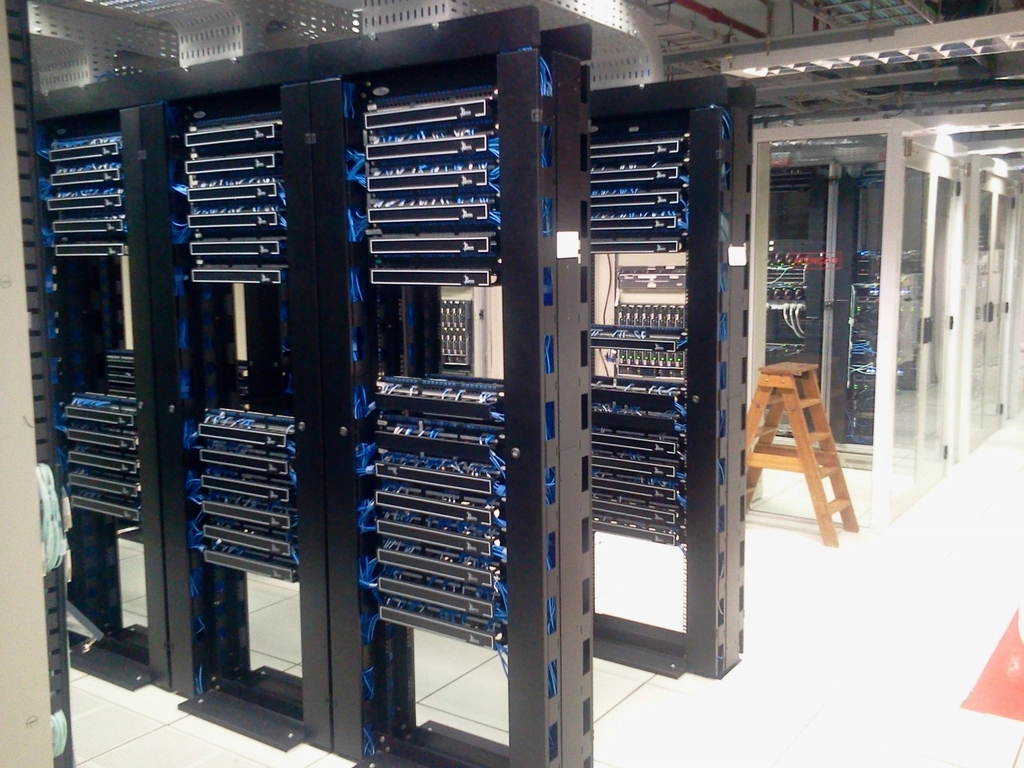
Server room representing the AI inference capacity at stake in the Nvidia Groq antitrust probe

The department opened the probe soon after the arrangement was announced, according to the reporting. That timing suggests the structure itself drew attention rather than any later conduct.

Why inference chips are the contested ground

Training a model and running it are different workloads. Training happens once and demands enormous parallel compute. Inference happens every time someone uses the model.

Inference volume grows with adoption. That makes inference silicon the larger long-run market, and the one where challengers have had the clearest opening against Nvidia.

Groq built its business on that opening. A deal that gives Nvidia access to its inference-optimised designs while moving its leadership across narrows the field, at least on paper.

None of that establishes a violation. A formal demand for information is an investigative step, not a finding.

The acqui-hire pattern regulators keep meeting

The structure at issue has become common across artificial intelligence. A large company licenses a startup’s technology, hires its senior leadership, and leaves the startup standing as a separate entity.

Each element looks ordinary on its own. Licences happen constantly. Executives change jobs constantly. Neither triggers a merger filing.

Combined, they can transfer the two things that matter most: the technology and the people who built it. What remains at the startup is a name, a cap table and whatever staff stayed behind.

Regulators in the United States, the United Kingdom and the European Union have all examined arrangements of this shape since 2024. Outcomes have varied, and several closed without action.

That history explains the department’s interest here without predicting where it lands. Structure alone does not establish harm, and the law asks about effects on competition rather than about form.

How this fits Nvidia’s wider regulatory picture

Nvidia is under pressure on several fronts at once. Export controls shape what it can sell and where, a subject we covered in our report on the chip export loophole.

Supply is the second front. Our note on the memory chip shortage sets out the constraint running through the whole accelerator market.

Litigation across AI companies is the third. Our coverage of Tennessee’s patent suit against Anthropic shows how quickly legal exposure has spread through the sector.

What happens after a demand for information

A civil investigative demand compels documents and answers. Companies typically negotiate scope before producing anything.

Most such investigations close without action. Some end in a consent agreement that changes how a deal is structured. A minority reach court.

Timelines run long. Antitrust reviews of this kind typically run for quarters rather than weeks.

Publicity is its own factor. Companies frequently adjust terms once an investigation becomes public, without ever conceding a problem.

Nothing in the reporting suggests the department has reached a view. It has asked for records, which is where these matters normally begin.

Nvidia has not commented publicly in the reporting reviewed here. Neither has Groq. Both descriptions of the deal so far come from the companies’ own framing at announcement.

That framing deserves scrutiny precisely because it is theirs. Calling a licence non-exclusive tells buyers Groq can still sell to others. It says nothing about whether Groq retains the people needed to do so.

Customers watching the probe face a practical question rather than a legal one. Anyone who designed a deployment around Groq silicon wants to know the roadmap survives the departures.

A Brazilian startup founder running inference at scale cares about supply and price, not about filing thresholds. Regulatory outcomes reach that founder slowly, if at all.

What people are asking about the investigation

  • What is being investigated? Whether Nvidia structured a $20 billion licensing deal with Groq to avoid antitrust review.
  • What was the deal? Groq described it in December as a non-exclusive licence giving Nvidia access to chips optimised for AI inference.
  • Did Nvidia buy Groq? No. Groq remained a separate company, though its chief executive and chief operating officer moved to Nvidia.
  • What step has the department taken? It sent Nvidia a formal demand for information.
  • Does this mean a violation occurred? No. An investigative demand is a request for records, not a finding.
  • Why does AI inference matter here? Inference workloads scale with usage, making inference chips the larger long-term market.

Continue reading on Tamara News

See our reporting on the Nvidia chip export loophole, the memory chip shortage and Tennessee’s patent case against Anthropic.

Sources

  • Bloomberg — DOJ Probes Nvidia’s $20 Billion License Deal With Groq on Antitrust Concerns. bloomberg.com
  • The Daily Guardian — US DOJ probes Nvidia’s licensing deal with AI startup Groq. thedailyguardian.com

153 Million Driver’s Licences Are for Sale. Now We Know Whose.

Identity verification firm IDScan confirmed on 10 September 2026 that attackers took data from its cloud systems. The IDScan data breach involves scans of more than 150 million driver’s licences, alongside millions of other government-issued documents. Reports put the figure at 153 million US and Canadian licences.

The stolen records include full names, driver’s licence numbers and identity numbers taken from documents such as passports. The company is notifying affected people and offering free credit monitoring and identity protection.

The FBI’s New Orleans field office opened an investigation. IDScan operates from Louisiana.

How the IDScan data breach came to light

The public trail started before the company confirmed anything. A dark web platform appeared advertising a searchable database of identity documents for sale.

That listing claimed more than 153 million driver’s licence records, over 10 million ID cards, and millions of further documents including medical cards and travel documents. The FBI began probing the reported breach in early September.

Laptop screen representing exposed records in the IDScan data breach

IDScan said it received information around 1 September indicating that data may have been accessed without authorisation. Its confirmation followed on 10 September.

The breach operators say they pulled data continuously over a year into their private database. That claim comes from the people selling the records, and no independent source confirms it.

The gap between the first public listing and the company’s confirmation ran roughly ten days. Victims therefore learned of the sale before they learned whose systems it came from.

Why an ID verification vendor holds this much

IDScan’s corporate customers range from entertainment venues to cannabis dispensaries. Those businesses check identity documents at the door or at the point of sale.

Verification services sit in the middle of that check. They receive the document image, confirm it, and return a result. Retaining the scan afterwards turns a transaction into a stored record.

That accumulation is what makes vendor breaches different from breaches at any single venue. One compromised supplier exposes every customer that supplier served.

We saw the same structural problem in our coverage of the American Tower data breach and in our report on the TruStage outage lawsuits.

What a stolen licence scan can actually do

A driver’s licence image is more dangerous than a stolen password. Anyone can change a password in seconds. Licence numbers do not work that way.

Document images are the raw material for account takeover at services that verify identity by photo. They also support synthetic identity fraud, where real details from several people are combined into a new profile.

Credit monitoring helps with the visible part. It flags new accounts opened in a person’s name. It does nothing about a document image circulating indefinitely.

Replacing a licence is possible in most jurisdictions but rarely quick. The number often stays the same.

Why this lands differently in each country

The records span both the United States and Canada. Remedies differ across that border and across individual states and provinces.

Most US states let residents freeze credit files with each of the three national bureaus at no cost. Canada operates a smaller bureau market, and the equivalent alert process varies by province.

Replacing a licence also differs. Some jurisdictions issue a fresh number after documented fraud. Others reissue the same number on a new card.

Anyone outside North America is not automatically clear either. The advertised database included travel documents, and passport details travel across borders in a way licence numbers do not.

A researcher from Hanoi who once showed a passport at a venue using this vendor sits in a different position from a local resident. The document she presented carries weight anywhere, and no single agency can reissue confidence in it.

Steps worth taking now

Place a credit freeze rather than relying on monitoring alone. A freeze blocks new accounts instead of reporting them after the fact.

Accept the identity protection if the company notified you. It costs nothing and creates a paper trail if disputes follow.

Treat unexpected identity-verification prompts with suspicion. An attacker holding a document image may attempt verification in your name.

Check statements more often for the next few months. Fraud from bulk data sales often surfaces well after the sale.

Keep the notification letter if one arrives. Banks and insurers frequently ask for proof of the underlying breach before they write off a disputed charge, and a dated letter settles that question faster than a news article does.

Points readers keep raising about the leak

  • How many records were taken? Reports describe scans of more than 153 million US and Canadian driver’s licences, plus over 10 million ID cards and further documents.
  • What data was in them? Full names, driver’s licence numbers and identity numbers from other government-issued documents such as passports.
  • When did IDScan find out? The company said it received information around 1 September and confirmed the breach on 10 September 2026.
  • Is law enforcement involved? Yes. The FBI’s New Orleans field office opened an investigation.
  • What is IDScan offering? Notification of affected individuals plus free credit monitoring and identity protection.
  • How long was data being taken? The breach operators claim exfiltration ran continuously over a year. That claim is theirs and is unverified.

More security reporting on Tamara News

Read our coverage of the American Tower data breach, the Berlin ransomware attack and the TruStage outage lawsuits.

Sources

  • TechCrunch — ID verification giant IDScan confirms data breach with more than 150 million driver’s licenses stolen. techcrunch.com
  • Krebs on Security — FBI Probes Service Selling 153M+ Drivers Licenses. krebsonsecurity.com
  • TIME — FBI Probes Report of Breach Exposing 153 Million Driver’s License Scans. time.com

Nvidia Just Spent $13 Billion on a Company Most Shoppers Have Never Heard Of

Nvidia agreed on September 3, 2026 to buy Hugging Face, the open-source AI development platform. The deal is valued at roughly $12.93 billion. The Nvidia Hugging Face deal is Nvidia’s second-largest acquisition on record. It gives the chipmaker a direct line to the more than 18 million developers who use Hugging Face to build and share AI models.

Data center server racks tied to the Nvidia Hugging Face deal expansion into AI software

Inside the Nvidia Hugging Face Deal

The agreement is structured as approximately $11.9 billion in cash plus up to $1 billion in equity retention for Hugging Face employees. That comes from Bloomberg’s reporting on the transaction and Nvidia’s own securities filing. Hugging Face runs a platform and community for developing, sharing and deploying open-source models, datasets and applications. It is the software layer Nvidia has spent years trying to get closer to as it defends its position in AI hardware.

Why Nvidia Is Buying Its Way Into Open Source

Nvidia’s business has historically centered on chips, not the open developer communities that build on top of them. Acquiring Hugging Face changes that. It connects Nvidia’s hardware, software and cloud computing services directly to a platform where millions of developers already publish and download models daily. CNBC reported that Hugging Face’s own leadership approached Nvidia CEO Jensen Huang weeks ahead of the announcement. That suggests the platform saw the tie-up as beneficial for its own growth, not just Nvidia’s.

Nvidia’s Growing Acquisition Trail

The Hugging Face purchase ranks as Nvidia’s second-biggest acquisition. It trails only the roughly $20 billion purchase of assets from chipmaker Groq, completed in December 2025. That earlier deal is now drawing separate scrutiny. The US Justice Department is investigating whether Nvidia structured its licensing arrangement with Groq specifically to avoid antitrust review. The question could color how closely regulators examine the Hugging Face acquisition as it moves toward closing. Nvidia has made dozens of smaller acquisitions in recent years as it builds out its software and networking capabilities, according to deal-tracking firm Tracxn. The Hugging Face purchase breaks that pattern in scale, ranking it alongside only the Groq transaction as a deal large enough to draw sustained regulatory attention.

Server hardware representing the computing infrastructure behind the Nvidia Hugging Face deal

What Happens Before the Deal Closes

Nvidia’s securities filing points to a close in the first half of next year, pending regulatory approval. Until then, Hugging Face is expected to keep operating its platform independently. Developers and rival chipmakers will be watching closely. They want signs of how tightly Nvidia intends to integrate the platform with its own hardware and cloud offerings once the deal completes.

How Rivals and Investors Are Reacting

The deal size is large in absolute terms, but it remains a fraction of Nvidia’s overall market value, which analysts say helps explain why it has not dominated investor attention the way the Groq deal once did. The purchase can be read as a defensive move as much as an offensive one, aimed at keeping rivals from building closer ties to the open-source community Hugging Face anchors. Google and Meta both maintain their own open-model efforts. Developers on Hugging Face’s platform currently publish models built for a wide range of competing chip architectures, not just Nvidia’s. Whether that openness survives the acquisition is one of the biggest questions developers are asking. The deal is expected to close in the first half of next year. An open question is what happens to community-contributed models once a single hardware maker owns the platform hosting them. Neither company has detailed what governance changes, if any, will follow once the acquisition closes.

Frequently Asked Questions

What did Nvidia agree to buy?

Nvidia agreed on September 3, 2026 to acquire Hugging Face, the open-source AI platform used by developers to share and deploy models. The price is approximately $12.93 billion.

How is the Nvidia Hugging Face deal structured?

The transaction is roughly $11.9 billion in cash plus up to $1 billion in equity retention for Hugging Face staff, according to Nvidia’s securities filing.

Why does Nvidia want Hugging Face?

Hugging Face’s platform connects Nvidia with more than 18 million developers who build, share and deploy open-source models. It deepens the tie between Nvidia’s chips and the software ecosystem built on top of them.

Is this Nvidia’s biggest acquisition?

It is Nvidia’s second-largest acquisition on record. Only the roughly $20 billion purchase of assets from chipmaker Groq, completed in December 2025, was bigger.

When will the deal close?

Nvidia’s securities filing points to a close in the first half of next year, subject to regulatory approval.

Does this deal face antitrust scrutiny?

Nvidia already faces a separate US Justice Department inquiry into its licensing arrangement with AI-chip startup Groq. That backdrop could shape how regulators approach the Hugging Face deal.

Taken together, the Hugging Face deal and the ongoing Groq antitrust inquiry show a company simultaneously expanding its reach and defending its past dealmaking. That balancing act will likely define how regulators and rivals view Nvidia’s next moves. For more on Nvidia’s expanding footprint in AI infrastructure, see our coverage of the chip export loophole Washington is trying to close and the memory chip shortage squeezing Apple, Nvidia and Samsung. Our report on OpenAI’s GPT-6 Astra release covers the model Nvidia’s hardware increasingly competes to run.

Sources