Anthropic’s Revenue Just Jumped — and the IPO Math Got Complicated

Anthropic’s business is growing fast enough that the company says it is approaching cash-flow positive territory, even as debate intensifies over how its eventual IPO should be valued. The Anthropic Q3 2026 revenue figures, reported this week at a roughly $16.8 billion quarterly run rate, mark one of the clearest signs yet that AI model providers are starting to convert massive compute spending into comparably large revenue.

IBTimes reported that Anthropic’s quarterly revenue jumped sharply from the prior period, with the company telling investors it is now at or near cash-flow positive — a milestone few AI labs burning through billions in compute costs have been able to claim. BigGo Finance’s coverage framed the number as intensifying an already heated debate over what Anthropic should be valued at whenever it does go public.

What’s driving the Anthropic Q3 2026 revenue jump

The growth is coming primarily from enterprise and developer usage of Anthropic’s Claude models through its API, alongside expanding usage of coding-focused products that have become a significant share of revenue across the AI industry this year. Anthropic has previously disclosed large compute-supply agreements, including commitments to purchase cloud capacity and chips from partners, spending that investors have been watching closely against revenue growth to judge whether the unit economics of running frontier AI models are improving.

A jump to a $16.8 billion quarterly run rate, if sustained, would represent a meaningful acceleration from earlier in the year and puts Anthropic’s revenue trajectory closer to rivals OpenAI and Google’s AI division, though direct comparisons are complicated by how each company reports usage versus contracted revenue.

Why the IPO valuation debate is heating up

Anthropic has been reported to be preparing for an eventual public listing, and earlier funding rounds have already pushed private valuations into the hundreds of billions of dollars. Time’s reporting on investor sentiment suggested some backers are tempering their valuation expectations given signs that overall AI-sector growth, while still strong, may be slowing from the breakneck pace of the past two years — even as Anthropic’s own revenue numbers this quarter moved in the opposite direction.

Anthropic Q3 2026 revenue

That tension — a single company posting accelerating revenue inside a sector some investors think is cooling overall — is likely to keep shaping how aggressively banks and investors price any eventual Anthropic offering. Reaching cash-flow positive status, if it holds up under full-year scrutiny, would also blunt one of the more common criticisms leveled at frontier AI labs: that none of them can run profitably at current compute costs.

What happens next for Anthropic

Anthropic has not set a confirmed IPO date, and companies at this stage typically wait for multiple quarters of consistent financial performance before committing to a listing timeline. The next marker to watch will be whether the cash-flow-positive status holds through the fourth quarter, and whether competitors disclose comparable figures that either support or undercut the sense that AI providers are turning a corner on sustainable unit economics.

Tamara News has also covered the regulatory side of the AI industry’s growth in its reporting on the EU AI Act’s enforcement actions against OpenAI and Anthropic and on warnings over AI data-center spending.

Frequently asked questions about Anthropic’s Q3 2026 revenue

How much revenue did Anthropic report for Q3 2026?

Anthropic’s quarterly revenue run rate reached roughly $16.8 billion, a sharp jump the company says has brought it near cash-flow positive status.

What is driving Anthropic’s revenue growth?

Growth is coming primarily from enterprise and developer usage of its Claude models via API, along with expanding demand for coding-focused AI products.

Is Anthropic profitable?

The company says it is now at or near cash-flow positive, though that is a narrower measure than full accounting profitability and has not been independently audited in public filings.

Does Anthropic have a confirmed IPO date?

No. The company has been reported to be preparing for an eventual public listing, but no confirmed date has been set.

Why are investors divided on Anthropic’s valuation?

Some backers are tempering valuation expectations amid signs that overall AI-sector growth may be slowing, even as Anthropic’s own quarterly revenue accelerated.

How does this compare to OpenAI and Google?

Direct comparisons are difficult because companies report usage and contracted revenue differently, but Anthropic’s trajectory is now seen as closer to its largest rivals than it was a year ago.

Sources

$750 Expedited US Visa Interview: Pilot Ends 31 December

The US is running a pilot that lets business and tourist visa applicants pay $750 for an expedited US visa interview at selected posts, and it ends on 31 December 2026. The State Department’s temporary final rule, published in the Federal Register on 9 June 2026, creates the fee for B-1/B-2 applicants only, from 1 July through 31 December. With about eleven weeks left, here is how it works and what it does not do.

In this explainer

How to request a slot

According to the rule text, applicants first complete the DS-160 form, pay the standard visa fee and book a regular appointment. They then ask for an earlier date and, where expedited slots exist, are shown options within ten business days. After choosing a slot, they have a short hold, described as five to ten minutes, to pay $750 online. If the payment is not made in time the slot is released and the original appointment stays. Law firm Cozen O’Connor describes the fee as paid in addition to the standard $185 application fee.

What the fee does not buy

The fee pays for an earlier interview slot and nothing else. Cozen O’Connor says it does not speed visa adjudication or administrative processing, and that slots are offered only where capacity exists, capped at a share of each post’s appointments. The rule says only a limited set of overseas posts take part, with the list kept by the Bureau of Consular Affairs on travel.state.gov, and it does not name them. An applicant who does not attend or who cancels forfeits the expedited fee, and the rule does not address refunds more generally. Existing no-fee expedite options remain, so some urgent cases may still qualify at no charge. Before paying, check the post’s own appointment page, because availability is decided post by post and slots can disappear during the short payment hold. Keep your DS-160 confirmation and payment receipts, and arrive with the documents your embassy lists for the interview.

Who should consider it

The route suits someone with a fixed business trip and a standard appointment that falls after it. Consider a hypothetical case. Arjun is an Indian engineer invited to a trade fair in Chicago in six weeks, with a regular interview slot booked for three months away. If his post takes part in the pilot, paying $750 could bring the interview forward, but it would not guarantee approval or remove any security checks. If the trip can move, waiting may cost nothing. Applicants should also be ready for the interview itself, since the rule leaves the usual eligibility standards unchanged.

What happens after 31 December

Cozen O’Connor describes the programme as a proof-of-concept pilot and says further updates may follow once it ends. Nothing in the sources says whether it will be extended, widened to other visa classes or dropped. Anyone planning travel in 2027 should not assume it will return. Other US costs and rules are changing too, as covered in our reports on the H-1B payment and the public charge rule. Our visa eligibility checker can help you compare destinations if timing is the problem.

Expedited interview questions

How much is the expedited US visa interview fee?

$750 per person, on top of the standard $185 application fee, according to Cozen O’Connor and the Federal Register rule.

Which visas does it cover?

B-1/B-2 business and tourism visas only, according to the rule text.

When does the pilot end?

31 December 2026. It began on 1 July 2026.

Does it guarantee a visa?

No. It only brings forward the interview slot. It does not speed adjudication or administrative processing.

Is it available at every embassy?

No. Only a limited set of posts take part, and the list is kept on travel.state.gov.

What if I cancel the appointment?

The rule says an applicant who does not attend or who cancels forfeits the expedited appointment fee.

Sources

A Judge Just Handed Apple a Win in Its War With OpenAI

A federal judge has sided with Apple in an early procedural fight over how much evidence it can pry out of OpenAI’s internal hiring records, giving the company’s trade-secrets case against the ChatGPT maker fresh momentum. The Apple OpenAI trade secrets lawsuit, filed in July 2026, accuses OpenAI of building its planned AI hardware around designs and know-how allegedly taken by former Apple employees who moved to the rival company.

TechCrunch reported on October 13 that the judge ordered OpenAI to turn over hiring records related to the employees at the center of the dispute, a win for Apple’s effort to establish a pattern it says goes beyond any single hire. Days later, 9to5Mac reported that Apple filed its first detailed public response to OpenAI’s countercharges, pushing back on OpenAI’s claim that Apple had improperly added new evidence to the case.

What the Apple OpenAI trade secrets case is actually about

Apple’s complaint centers on a small number of former employees who worked on in-development hardware projects before leaving for OpenAI, which has been building its own line of AI-first devices since acquiring hardware designer Jony Ive’s startup. Apple alleges those employees carried proprietary design files and technical specifications for unreleased products with them, material it says gave OpenAI an unfair shortcut in its own hardware development.

OpenAI has pushed back hard, framing the suit as an attempt by Apple to slow down a competitor through litigation rather than genuine concern over stolen material, and has separately accused Apple’s legal team of improperly expanding its claims as the case has proceeded through the fall. Neither company’s characterization of the other’s motives has been tested in court yet; both remain the parties’ own disputed accounts rather than established fact.

Why the discovery ruling matters

Getting access to OpenAI’s internal hiring records is significant because it lets Apple’s lawyers look for communications, recruiting notes or internal approvals that might show whether specific technical knowledge — rather than just general industry experience — was a factor in how OpenAI brought the former Apple employees on board. Virginia Lawyers Weekly reported this week that Apple’s filings allege at least one employee took files related to an unreleased device before departing, a claim that would be central to proving the “pattern at every level” Apple’s original complaint described.

Apple OpenAI trade secrets

9to5Mac also reported that Apple won early access to additional OpenAI documents and employee testimony beyond the hiring records, suggesting the discovery phase is moving faster, and more in Apple’s favor procedurally, than is typical this early in a trade-secrets dispute of this size.

What happens next in the case

With discovery now underway on hiring records and internal documents, the next milestones are depositions of the employees named in Apple’s complaint and further motions over what evidence can be used at trial. Trade-secrets cases of this scale often settle before reaching a jury, but neither company has signaled an interest in resolving the dispute privately so far, and OpenAI’s own counter-filings suggest it intends to contest the claims rather than negotiate an early exit.

For more on the AI industry’s current legal and competitive pressures, see Tamara News’s coverage of Anthropic’s warning on self-replicating AI systems and the EU AI Act’s enforcement actions against OpenAI and Anthropic.

Frequently asked questions about the Apple OpenAI trade secrets case

When did Apple file its lawsuit against OpenAI?

Apple filed the trade-secrets lawsuit in July 2026, alleging former employees took proprietary hardware design material to OpenAI.

What did the October court ruling decide?

A judge ordered OpenAI to turn over hiring records related to the employees named in Apple’s complaint, a discovery win reported by TechCrunch on October 13.

How has OpenAI responded to the allegations?

OpenAI disputes the claims and has accused Apple of improperly expanding its case with new evidence and arguments as the litigation has proceeded.

What kind of hardware is OpenAI accused of building with stolen material?

Apple’s complaint centers on unreleased AI-first hardware OpenAI has developed since acquiring designer Jony Ive’s hardware startup.

Could this case be settled before trial?

It’s possible, but neither company has signaled interest in a private settlement so far, and both sides are actively contesting evidence and discovery requests.

What happens next in the litigation?

The next steps are expected to include depositions of the named employees and further disputes over what evidence can be introduced at trial.

Sources

Boeing’s Delivery Numbers Just Sent a Quiet Signal to Airlines Everywhere

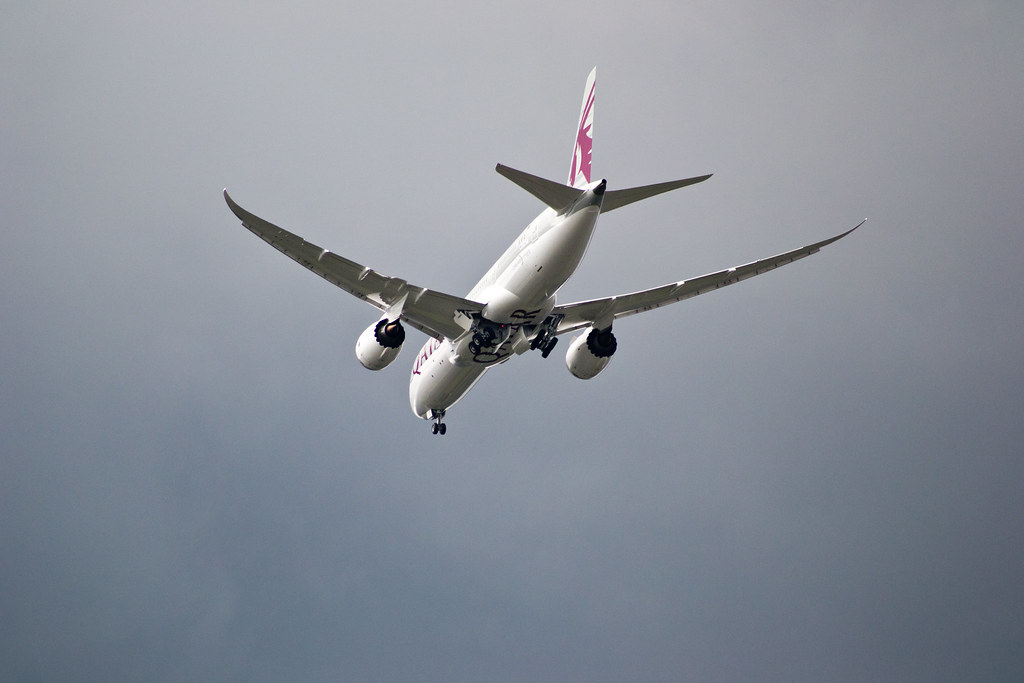
Boeing is finally stringing together the kind of production numbers it needs to convince investors its recovery is real. The planemaker’s Boeing Q3 2026 deliveries report, released on October 13, showed another steady quarter of commercial aircraft handovers, continuing a rebound that began after years of production caps, safety reviews and supply-chain bottlenecks following the 737 MAX crisis and the 2024 door-plug incident.

Boeing’s own investor release and trade coverage from Centre for Aviation put September deliveries at 57 commercial aircraft against 165 new orders for the month, part of a broader third-quarter total the company detailed in its October 13 statement. The figures matter beyond Boeing’s own balance sheet: the company’s delivery pace has become a proxy for how much new aircraft capacity airlines worldwide can actually count on through the rest of the decade.

What’s behind the Boeing Q3 2026 deliveries recovery

Boeing has spent much of the past two years working through a regulator-imposed cap on 737 MAX production rates, a cap the Federal Aviation Administration put in place after the January 2024 door-plug blowout exposed quality-control failures at Boeing’s Renton factory and at supplier Spirit AeroSystems. Lifting and gradually raising that cap has been the single biggest driver of Boeing’s delivery recovery through 2026, alongside efforts to stabilize its supplier base after Spirit AeroSystems’ integration back into Boeing.

The steadier cadence shown in the Q3 figures suggests those fixes are holding under real production pressure rather than just clearing a backlog. Boeing’s full third-quarter financial results, due October 27, will show whether the delivery pace is translating into the cash flow and margin improvement investors have been waiting for since the MAX grounding years.

Why airlines are watching the numbers so closely

Airlines around the world have had to delay fleet renewal and route expansion plans repeatedly because Boeing — and, to a lesser extent, Airbus — simply couldn’t deliver aircraft on the schedules originally promised. Carriers that ordered 737 MAX jets years ago have absorbed years-long delays, forcing some to keep older, less fuel-efficient aircraft flying longer than planned or lease replacement capacity at a premium.

Boeing Q3 2026 deliveries

A sustained, predictable delivery pace from Boeing would let airlines plan capacity additions with more confidence heading into 2027 scheduling, particularly on routes where MAX variants are the primary aircraft ordered. It would also ease some of the fleet-age pressure that has kept maintenance costs elevated industry-wide while newer jets sat unbuilt.

What happens next for Boeing

Boeing’s full Q3 earnings report on October 27 will add detail the delivery announcement alone doesn’t provide — cash burn, defense-unit performance and progress on the 777X program, which has faced its own repeated delays separate from the 737 MAX issues. Analysts will also be watching whether the September delivery pace holds into the fourth quarter or whether supplier constraints resurface, as they have multiple times since the production cap was first imposed.

Tamara News has also covered other corners of this quarter’s earnings season in its reporting on Goldman Sachs and Wells Fargo’s Q3 results and the start of bank earnings season.

Frequently asked questions about Boeing Q3 2026 deliveries

How many aircraft did Boeing deliver in the third quarter of 2026?

Boeing’s September figures alone showed 57 commercial aircraft delivered against 165 new orders, part of a broader third-quarter total detailed in the company’s October 13 investor release.

Why did Boeing’s deliveries fall so far behind in the first place?

A production cap imposed by the FAA after the January 2024 door-plug incident, combined with supply-chain problems at supplier Spirit AeroSystems, limited how many 737 MAX jets Boeing could build and hand over for roughly two years.

Has the FAA’s production cap been lifted?

Boeing has been working through a gradual increase in permitted production rates rather than a single full lift, with the steadier Q3 delivery cadence suggesting those increases are holding under real output pressure.

When does Boeing report full Q3 financial results?

Boeing’s full third-quarter earnings report is scheduled for October 27, 2026, which will include financial detail beyond the delivery and order numbers already released.

How does this affect airlines?

A steadier delivery pace lets airlines plan fleet renewal and route expansion with more confidence, after years of delays that forced many carriers to keep older aircraft in service longer than planned.

Is the 777X program affected by these numbers?

The delivery figures released so far cover primarily the 737 MAX program; the 777X has faced its own separate, repeated delays that the full Q3 earnings report is expected to address.

Sources

Japan Residence Permit Fees Rise From 1 October 2026

Japan residence permit fees rose sharply on 1 October 2026. Foreign nationals now pay between ¥10,000 and ¥75,000 to extend or change their status, depending on how long the permission lasts, and ¥200,000 for permanent residence, up from a flat ¥10,000. According to Metropolis Japan, the Cabinet approved the ordinance on 25 August 2026, and fees depend on the date an application is received. Applications accepted on or before 30 September pay the old rates.

At a glance

The new fee table

Until 30 September, an extension or change of status cost ¥6,000 in person or ¥5,500 online, whatever the length of permission. The fee now rises with the length of stay, according to the table published by Erickson Immigration Group, which links to Ministry of Justice materials:

  • Up to 3 months: ¥10,000 in person and online.
  • 3 to 6 months: ¥18,000 in person, ¥15,000 online.
  • 6 to 12 months: ¥25,000 in person, ¥21,000 online.
  • 1 year: ¥33,000 in person, ¥27,000 online.
  • 1 to 3 years: ¥48,000 in person, ¥42,000 online.
  • 3 to 5 years: ¥64,000 in person, ¥56,000 online.
  • 5 years or more: ¥75,000 in person, ¥65,000 online.

The online discount applies to every band above three months. Metropolis Japan adds that a Certificate of Eligibility remains free.

Permanent residence

The largest change is permanent residence. The fee is ¥200,000 and, according to both sources, the online option does not apply, so applications are made in person. Metropolis Japan reports that the Immigration Services Agency framed the revision as recovering processing costs, and that Justice Minister Hiraguchi Hiroshi described its aim as an orderly society coexisting with foreign nationals. Reduced fees are available to some applicants in financial difficulty, including people recognised as refugees, but the sources give no amounts or criteria.

Entry visa fees

This is the second increase this year. The Nation reported on 23 June that the Cabinet had approved a fivefold rise in consular visa fees from 1 July 2026, the first revision since 1978. Single-entry visas went from ¥3,000 to ¥15,000 and multiple-entry visas from ¥6,000 to ¥30,000. The article names no primary government document, so check the Ministry of Foreign Affairs or your nearest Japanese embassy for the current schedule.

Who pays more

Everyone who renews, changes status or applies for permanent residence in Japan. Metropolis Japan lists extensions, changes of status such as to Business Manager, and permanent residence among the affected procedures. Consider a hypothetical case. Wei is a Chinese researcher with a two-year permission who renews in person next spring. Under the new table that falls in the one-to-three-year band, so he would pay ¥48,000 in person or ¥42,000 online, against ¥6,000 or ¥5,500 before. For a family renewing together, the cost multiplies by each person.

How to plan renewals

Check how long your current permission lasts and which band your renewal is likely to fall into. Use the online route where it is available, since it is cheaper in every band above three months. Note the received date, not the date you prepare the paperwork. Employers sponsoring staff should budget for the longer-permission bands. For other regional fee changes, see our reports on Singapore’s ONE Pass and New Zealand’s visa fees, and use our visa eligibility checker if you are comparing destinations. The Immigration Services Agency’s official site is where fee tables are published.

Japan fee questions

When did Japan’s residence fees rise?

On 1 October 2026. Fees depend on the date an application is received, so those accepted by 30 September pay the old rates.

How much is permanent residence now?

¥200,000, up from ¥10,000, according to Metropolis Japan and Erickson Immigration Group. Applications are made in person.

What does a one-year extension cost?

¥33,000 in person or ¥27,000 online, according to the published table.

Are online applications cheaper?

Yes, for every band above three months. For stays of up to three months the fee is ¥10,000 either way.

Did Japan also raise visa fees?

The Nation reports a fivefold rise in consular visa fees from 1 July 2026, with single-entry at ¥15,000 and multiple-entry at ¥30,000.

Is there any reduction?

Metropolis Japan says reduced fees apply to some applicants in financial difficulty, including refugees. Amounts are not given.

Sources