Good News for Most Visa Applicants in November — Unless You’re From India or China

The State Department’s November 2026 visa bulletin advances several employment-based green card dates for most of the world. Applicants from India and China, though, face yet another month with almost no movement in their categories.

What Changed in the November 2026 Visa Bulletin

The new dates are based on visa demand reported through October 5, 2026, according to Newsweek. For most countries, Mexico and the Philippines, EB-1 remains current. EB-2’s final action date advances three months to April 1, 2025. EB-3 advances one month to June 15, 2024. EB-3 Other Workers jumps five months to June 1, 2022, for the same group of countries. That is the single largest move in this month’s bulletin.

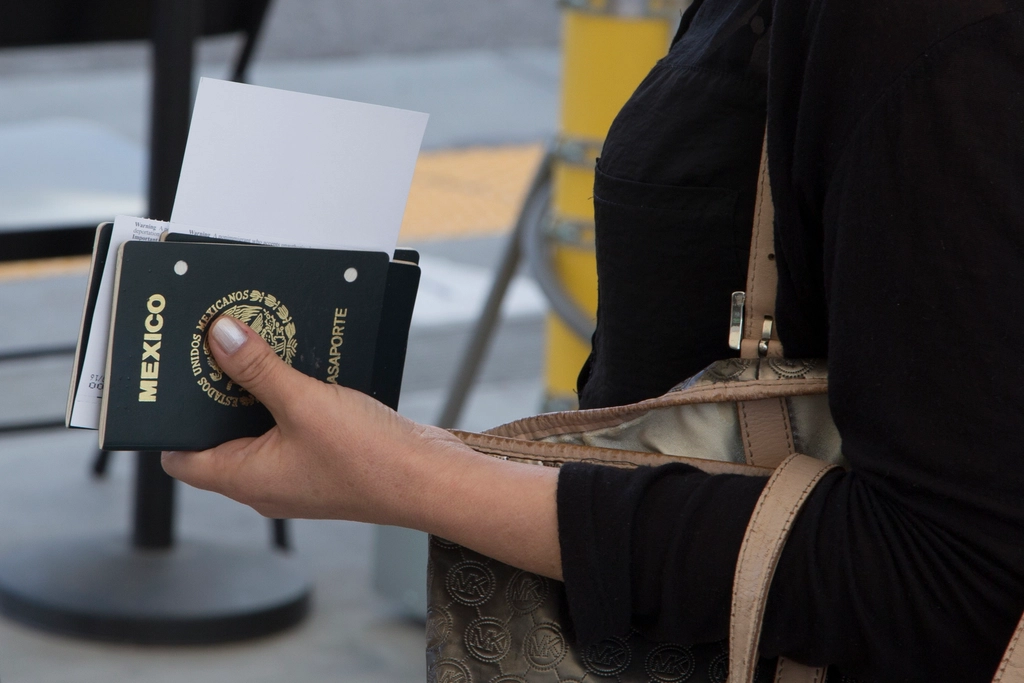
November 2026 visa bulletin passport with visa stamp

Why India and China Barely Moved

India’s EB-2 final action date stays frozen at November 1, 2013. China’s EB-2 holds at October 1, 2021. China’s EB-1 advances a single month, to August 1, 2023, while India’s EB-1 stays put at February 1, 2023. Both countries’ EB-3 Other Worker categories edge forward by just 14 days, to January 22, 2014, according to Erickson Immigration Group. China’s EB-3 moves separately to January 22, 2022. EB-4 holds at December 15, 2022 across the board. EB-5’s unreserved category stays current for most countries, with China fixed at December 1, 2016 and India at December 1, 2023.

What This Means for H-1B Workers Waiting on Green Cards

Douglas S. Pierce, a former USCIS supervisor who retired in late 2025, told Newsweek the lack of movement is especially significant for Indian and Chinese H-1B workers. “The biggest things that stand out are the lack of movement forward on India employment preference categories,” Pierce said. He added that H-1B workers from both countries are being “profoundly impacted by the lack of movement on these numbers.” Pierce linked the bulletin’s limited progress to other changes this year, including higher H-1B filing fees and changes to the PERM labor certification program and H-4 work authorization.

Filing Dates and What USCIS Will Accept

Separate from the final action dates, the bulletin’s Dates for Filing chart sets a later, more generous cut-off. That date determines when applicants can submit paperwork. For November 2026, the EB-2 filing date sits at March 15, 2026 for most countries, including Mexico and the Philippines. For India, it’s January 15, 2015. USCIS has confirmed it will accept adjustment-of-status applications using the Dates for Filing chart for November. That gives many applicants a few extra months to file before their final action date actually arrives.

How Priority Dates and the Visa Bulletin Fit Together

The visa bulletin’s dates matter because of how the US caps green cards each year. Congress sets an annual limit for each employment-based category. Demand from countries like India and China regularly exceeds that limit, since both countries have large numbers of pending petitions. When demand outstrips supply, the State Department sets a cut-off date. Only applicants whose priority date falls before that cut-off can move forward that month. A priority date is simply the date an employer first filed a petition on the worker’s behalf. India and China send far more petitions than the per-country limits were built to handle. That is why workers from those two countries tend to wait years longer than applicants from almost anywhere else. The imbalance is structural, not the result of any single policy change. It’s the main reason the same two countries land at the back of the queue nearly every month. That is also why India and China are listed as separate columns rather than folded into the “all other countries” category used for most of the world on the same chart. Most other countries move through their categories far faster as a result, since they share a single, much larger pool of available visa numbers each year.

The Caveat Every Applicant Should Know

The State Department routinely warns that cut-off dates can move backward. That happens if demand in a category exceeds the visas available for the rest of the fiscal year. Categories can also become temporarily unavailable altogether. Reaching your priority date on the bulletin isn’t the same as approval. It only means your case becomes eligible for the next stage of processing, which can still take months depending on USCIS workload.

Related Coverage on Tamara News

For more on the policy backdrop shaping these numbers, see our coverage of the DHS proposal to end deference on work visa extensions, the PERM suspension affecting major employers, and the $750 expedited visa interview pilot program.

November 2026 Visa Bulletin: Reader Questions

What is the November 2026 visa bulletin?
The State Department’s monthly update on employment and family-based green card cut-off dates, released in late October 2026 based on demand through October 5.

Did India’s EB-2 category move this month?
No. India’s EB-2 final action date remains at November 1, 2013.

Which category saw the biggest advance?
EB-3 Other Workers for most countries and Mexico, which advanced five months to June 1, 2022.

Can applicants file paperwork before their final action date arrives?
Yes, if their priority date is earlier than the Dates for Filing chart’s cut-off, which USCIS has confirmed it will accept for November 2026.

Why are H-1B workers particularly affected by this bulletin?
Former USCIS supervisor Douglas Pierce says the lack of movement in India’s categories compounds other recent changes, including higher H-1B fees and PERM program restrictions.

Can a visa bulletin cut-off date move backward?
Yes. The State Department can retrogress a date if demand exceeds the visas available for the rest of the fiscal year.

Three Trillion-Dollar Earnings Reports Land This Week — Here’s What Wall Street Wants to See

This is Big Tech earnings week. The numbers coming out of Redmond, Mountain View and Seattle will show whether AI spending is paying off yet. Microsoft and Alphabet report after markets close on Wednesday, October 28, 2026. Amazon follows on Thursday, October 29, according to a report carried by TokenPost.

What Wall Street Expects From Big Tech Earnings Week

Analysts polled ahead of the reports expect Microsoft to post earnings of $4.71 per share. That is on revenue of $90.63 billion for its fiscal first quarter of 2027. Alphabet is expected to report $3.03 per share on roughly $127.92 billion in revenue. Amazon’s consensus estimate is $1.96 per share on revenue of about $202 billion, based on figures reported by KuCoin News. None of the three companies has confirmed these figures. They are analyst projections, not guidance.

Big Tech earnings week stock market trading screen

The AI Capex Question Hanging Over the Results

Every one of these reports will be read first for capital expenditure figures. AI infrastructure spending matters more right now than the headline revenue and profit numbers. All three companies have spent heavily this year on data centers, custom chips and cloud capacity. Investors are increasingly asking when that spending converts into proportionate revenue growth. A quarter showing spending accelerating faster than AI-related revenue would likely unsettle a market already having a rough week.

A Shaky Market Walking Into the Reports

Both benchmarks were already under pressure heading into earnings week. The Nasdaq Composite closed at 25,955.34 on Friday, October 23, down 0.21% for the session. The S&P 500 finished at 7,623.68, down 0.52%, extending its losing streak for the week. That backdrop raises the stakes for each report. A market already pricing in some disappointment can swing sharply on results that beat or miss by even a modest margin. The Federal Reserve’s own rate decision lands in the same 48-hour window, adding another variable.

Why the Timing Makes This Week Unusually Loaded

Big Tech earnings week overlaps almost exactly with the Fed’s October 27-28 policy meeting. Traders are digesting rate guidance and corporate earnings at the same time. A Fed that sounds confident alongside strong AI-driven results would reinforce the market’s current optimism. A weaker combination from either side could compound the other’s effect in either direction.

Why These Four Companies Move the Whole Market

Microsoft, Alphabet and Amazon are among the handful of companies whose combined value makes up a large share of major US indexes. That is why their results tend to move the Nasdaq and S&P 500 as a whole, not just their own share prices. Apple reports separately on Thursday alongside Amazon. It rounds out the group of companies whose AI spending decisions are shaping how the broader market reads this earnings season. A disappointing set of results from even one of them can drag down sentiment well beyond that single stock.

Why AI Capex Has Become the Market’s Main Obsession

Wall Street’s focus on capital spending wasn’t always this intense. A year ago, investors cared mostly about cloud revenue growth and advertising numbers. That shifted as Microsoft, Alphabet and Amazon each disclosed sharply higher spending commitments on AI infrastructure over the past year, pushing their combined capital expenditure plans well above where they stood going into 2026. The logic now cuts both ways. Spending that outpaces revenue growth raises questions about returns on that investment, while spending seen as falling short of expectations can be read as a company pulling back on AI, which markets have punished just as harshly. That is part of why each report this week will be parsed line by line for capex guidance, not just the headline profit and revenue figures investors used to focus on first. Analysts will also compare each company’s capex guidance against what it signaled just one quarter earlier, since the pace of change has itself become a story investors watch closely.

What to Watch Once the Reports Are Out

Beyond the headline beat-or-miss, watch each company’s forward guidance on cloud growth and AI spending plans for 2027. Microsoft’s results will also be scrutinized for anything related to its financial exposure to OpenAI. That relationship has weighed on its stock since its last earnings report. However the numbers land, the reaction is likely to ripple through the rest of the market. A small number of AI-exposed companies have driven much of the S&P 500’s recent gains.

Related Coverage on Tamara News

For more on the AI infrastructure buildout behind these results, see our coverage of Anthropic’s jump in quarterly revenue, Google Cloud’s new AI chip instances, and Nvidia’s rapid AI data center build.

Big Tech Earnings Week: Common Questions

When do Microsoft and Alphabet report earnings this week?
Both report after markets close on Wednesday, October 28, 2026.

When does Amazon report?
Amazon reports on Thursday, October 29, 2026.

What revenue is Microsoft expected to post?
Analysts expect roughly $90.63 billion in revenue and $4.71 in earnings per share for Microsoft’s fiscal first quarter of 2027.

Why is this earnings week considered especially important?
It overlaps with the Federal Reserve’s October rate decision and follows a weak week for both the Nasdaq and S&P 500, raising the stakes for any surprise.

What are investors watching for beyond revenue and profit?
Capital expenditure and AI infrastructure spending figures, since these show whether AI investment is converting into proportionate revenue growth.

Has any of the three companies confirmed these estimates?
No. The figures are analyst consensus projections, not guidance from Microsoft, Alphabet or Amazon.

Maduro Faces a Second Set of Charges — And They’re Worse Than the First

The man US forces captured in a January raid on Caracas now faces a second set of federal charges. Manhattan federal court unveiled the Maduro torture indictment on October 8, 2026. It adds a conspiracy-to-commit-torture charge. That charge sits alongside the drug trafficking case Nicolás Maduro and his wife, Cilia Flores, already face. Both have pleaded not guilty to the drug charges.

What the Maduro Torture Indictment Alleges

Federal prosecutor Jamie McDonald announced the revised indictment at a news conference. He said the conspiracy’s members “were holding the shovel.” Prosecutors allege the scheme ran from at least 1999 through 2025. It drew in Venezuelan military, intelligence and law enforcement officials, according to Al Jazeera. Prosecutors say officials shocked and asphyxiated one detainee. That followed his arrest after a 2018 drone attack the Venezuelan government blamed on an effort to target Maduro.

Maduro torture indictment courtroom gavel symbolizing the case

The American Victims Named in the Case

Prosecutors cite three US citizens detained in Venezuela. Intelligence officers arrested one in January 2025 without even targeting him specifically. Officials allegedly beat him over two days, causing a permanent eye injury. They reportedly released him about a year later and warned him not to disclose what happened. Prosecutors allege Maduro personally directed, or was regularly briefed on, detainee abuse. In one instance, he allegedly ordered officials to “squeeze them harder” after a detained officer remained defiant. Flores allegedly attended some meetings where officials discussed detainee treatment.

How Maduro Ended Up in US Custody

Maduro served as Venezuela’s president from 2013 until his capture on January 3, 2026. US military forces seized him and Flores from their Caracas home that day. President Trump had authorized the raid, according to PBS NewsHour. Delcy Rodríguez now serves as Venezuela’s acting president. Brooklyn’s Metropolitan Detention Center holds both Maduro and Flores. Their drug trafficking trial is set for June 1, 2027. Maduro’s attorney, Barry Pollack, says his client denies the new torture allegations and looks forward to his day in court.

A Separate Fight Over Flores’s Detention

Judge Alvin Hellerstein denied a request to release Flores over medical concerns the same Thursday prosecutors unveiled the torture charges. Her lawyers told the court she is 69 and has lost 25 pounds. She may have suffered a minor heart attack in July. The court wasn’t persuaded that her condition justified release before trial. Her attorney said at the time he hadn’t yet reviewed the new torture allegations in detail.

What the New Charges Change Going Forward

The torture count doesn’t replace the drug trafficking charges. It sits alongside them, giving prosecutors a second and arguably more politically resonant case for the June 2027 trial. Venezuela is still adjusting to Maduro’s removal after more than a decade in power. The indictment keeps the accountability question in American courts rather than Venezuelan ones. That dynamic is likely to shape both the legal proceedings and the political transition under Rodríguez’s acting government. Venezuelan officials who served under Maduro now face a choice. They can cooperate with the broader investigation, or risk their own exposure if evidence implicates them directly.

What Happens Next in the Legal Process

A superseding indictment like this one does not restart the case from scratch. It adds the torture conspiracy charge to proceedings already underway over the drug trafficking allegations. Both sets of charges are set for the same June 2027 trial. Between now and then, prosecutors and defense attorneys exchange evidence through discovery. Courts also hear pretrial motions over what evidence can be used at trial. Maduro and Flores are expected to formally respond to the amended charges at an arraignment in the coming weeks. The allegations span more than two decades and involve multiple co-conspirators and overseas witnesses. Prosecutors have signaled that pretrial proceedings alone could take months. Judge Hellerstein denied Flores’s separate request for release pending trial, citing her medical condition. That ruling suggests both defendants will likely stay in federal custody at the Metropolitan Detention Center through pretrial proceedings. Federal criminal trials in the Southern District of New York are open to the public and press, so each stage of the case, from arraignment through jury selection, is likely to draw significant attention. US media outlets covered the January 2026 capture and the original drug trafficking charges heavily, and interest in the case has stayed high since.

Related Coverage on Tamara News

For more on Venezuela’s post-Maduro transition, see our coverage of the nationwide protests demanding new elections. We’ve also reported on the proposed window for Russia-Ukraine peace talks, another case testing what follows a change at the top.

Maduro Torture Indictment: Questions Readers Are Asking

What is the Maduro torture indictment?
A federal indictment unveiled October 8, 2026, in Manhattan. It adds a conspiracy-to-commit-torture charge to Nicolás Maduro’s existing drug trafficking case.

Is Maduro still president of Venezuela?
No. US forces captured him in January 2026, and he remains in federal custody in New York. Delcy Rodríguez is Venezuela’s acting president.

Who else was charged alongside Maduro?
His wife, Cilia Flores, faces the same torture conspiracy charge along with the existing drug trafficking charges.

What do the torture charges allege?
That Venezuelan officials tortured detainees between 1999 and 2025. Prosecutors say Maduro directed or was briefed on the abuse, and at least three victims were US citizens.

Where is Maduro being held?
At the Metropolitan Detention Center in Brooklyn, New York.

When is the trial scheduled?
June 1, 2027, according to court filings reported by PBS NewsHour.

Australia Holds 2027 International Student Level at 295,000

Australia has confirmed its 2027 National Planning Level for international students at 295,000 new commencements, the same figure as 2026, according to an announcement published by Study Australia on 15 July 2026. The government says no active education provider will receive a lower allocation in 2027 than in 2026. The level is a planning tool and not a legal cap, but it still shapes how quickly student visas are processed, so it matters to anyone planning a 2027 intake.

In this report

What was announced

The figure is 295,000 new overseas student commencements (NOSCs), unchanged from 2026. The Study Australia page, which republishes the settings from the Department of Education’s announcement on the managed system for international education, says provider allocations will not fall for any active provider. We read the Study Australia page, not the department’s own page, so check the department site for the wording of record.

The government stresses that the level is “not a cap or a limit on student numbers”. It is the number used to plan the size of the international education program, and each provider is given an allocation within it.

How the 80% rule affects visa processing

The practical effect comes through processing priority. According to the announcement, student visa applications are Priority 1 until the chosen provider reaches 80% of its commencement allocation. After that point, applications are still accepted but are processed more slowly. Genuine students who meet student visa requirements can still apply and be granted a visa.

That means timing and choice of provider both matter. An application to a provider that has used most of its allocation can take longer than one to a provider with room left, even when the applicant is equally well qualified.

What it means for applicants

Consider a hypothetical example. Priya is an Indian student planning a master’s course starting in 2027. If she applies early to a provider that is still under 80% of its allocation, her visa application sits in the fastest queue. If she waits until late in the intake cycle, the same application could be processed more slowly. Nothing in the announcement says she would be refused for that reason.

The planning level also sits alongside other Australian changes we have covered, including the student visa changes from 2 October 2026, the 25 percent rise in visa application charges and the Ministerial Direction 123 character-test changes. If you are comparing destinations, our visa eligibility checker can help you check the route before you pay a deposit.

What the announcement does not say

The page we read does not give a sector breakdown of the 295,000 figure, does not change visa fees, and does not list allocation or application dates for 2027. Those details may appear elsewhere, but we have not seen them and do not report them. Treat any third-party claim about sector splits as unverified until the department publishes it.

What happens next

Providers will use their 2027 allocations as they manage offers and enrolments. Applicants should ask their chosen provider how much of its allocation is committed, apply early, and keep an eye on official departmental updates. Tamara News will update this story if the government changes the level or the processing rules.

Questions on the 2027 planning level

What is the 2027 National Planning Level?

295,000 new overseas student commencements, unchanged from 2026, according to the announcement published on Study Australia on 15 July 2026.

Is it a cap on student numbers?

No. The announcement says it is not a cap or a limit on student numbers. It is a planning level for managing the size of the program.

Will any provider get less than in 2026?

The announcement says no active provider will receive a lower allocation in 2027 than in 2026.

What is the 80% rule?

Student visa applications are Priority 1 until the chosen provider reaches 80% of its commencement allocation. After that they are still accepted but processed more slowly.

Can I still get a visa if my provider is near its allocation?

The announcement says genuine students who meet student visa requirements can still apply and be granted a visa.

Does the announcement change visa fees?

The page we read does not mention any fee change.

Sources

Singapore Keeps Its Passport Crown, But One Rival Is Closing In Fast

The Henley Passport Index 2026 has Singapore holding the top spot again. The bigger story this year is how much ground the United Arab Emirates has closed on the traditional leaders. The index ranks 199 passports by how many destinations their holders can enter without a prior visa. It shows a widening gap between the most mobile travelers and everyone else.

Singapore Stays on Top of the Henley Passport Index 2026

Singapore’s passport gives holders visa-free or visa-on-arrival access to 192 destinations. That is enough to keep it in first place, a spot it has held for several years, according to Travel And Tour World. No other passport matches that figure in the current rankings.

Henley Passport Index 2026 traveler at airport passport control

The UAE’s Climb to Second Place

The UAE now sits in a three-way tie for second with Japan and South Korea. Each offers access to 187 destinations. A decade ago, the UAE passport ranked far outside the top ten. Its rise reflects years of bilateral visa-waiver agreements the country has negotiated, though Henley’s published summary doesn’t break out the exact year-over-year gain. Belgium, Denmark, Germany, Ireland, Italy and Switzerland share fourth place with 185 destinations apiece.

Where the UK and US Rank in the Henley Passport Index 2026

The United Kingdom sits sixth with 183 destinations, tied with Hungary, Malaysia and Poland. The United States ranks tenth, with access to 179 destinations. Both countries have slipped down the index over the past decade. Gulf and East Asian passports have added visa-free agreements faster than legacy Western powers have. At the other end of the list, Afghanistan ranks last among the 199 passports assessed. Its holders can enter just 23 destinations without a prior visa.

Why the Rankings Keep Shifting

Henley’s index is built entirely from the number of visa-waiver agreements each country has in place. That means it moves whenever governments sign new deals or suspend old ones. It is as much a snapshot of diplomatic relationships as of tourism convenience. A passport’s rank can rise even if its holder’s actual travel habits never change, simply because their government struck a new agreement with another state.

How the Index Has Shifted Over the Past Decade

Henley has tracked passport strength using the same travel-document database for years, which is part of why comparisons across editions are considered reliable. Singapore has sat at or near the top for most of the index’s recent history, while the biggest story of the past decade has been the Gulf region’s rise. The UAE’s jump from outside the top ten to a share of second place reflects a deliberate diplomatic strategy rather than a single breakthrough deal, built instead on a string of bilateral waiver agreements signed over several years. Traditional Western powers such as the UK and US have not lost agreements outright. They have simply added new ones more slowly than Gulf and East Asian governments have, which is enough on its own to erode a ranking even without any country tightening its own rules. The practical effect for travelers is that passport strength has become less tied to a country’s wealth or diplomatic weight alone, and more to how actively its government has pursued waiver deals in recent years. Henley compiles the index twice each year, so a country’s position can still shift by the time the next edition is published.

Which Regions Dominate the Top of the 2026 Rankings

The top tier this year is a mix that would have looked unusual a decade ago. A Southeast Asian city-state holds first place. A Gulf state and two East Asian economies share second place. Six European countries bunch together in fourth. That spread shows the ranking is no longer a story of Europe versus the rest. Gulf states in particular have spent years negotiating reciprocal visa-waiver deals, pushing passports like the UAE’s into contention with the traditional leaders. European passports still dominate the upper-middle of the table, but they no longer have the top spot to themselves.

What the Gap Means for Travelers

For travelers from the top ten, a visa is rarely the obstacle it once was. For those lower down the list, including Afghan nationals, a visa application is still a routine part of almost any trip abroad. That comes with the cost, paperwork and waiting time it always has. The Henley Passport Index 2026 doesn’t just rank convenience. It’s a rough proxy for how unevenly visa-free mobility spreads worldwide.

Related Coverage on Tamara News

For more on how visa access is shifting around the world, see our coverage of Dubai’s record year for golden visas, South Korea’s extended travel exemption, and the US pilot program for expedited visa interviews.

Henley Passport Index: Reader Questions

Which passport ranks first in the Henley Passport Index 2026?
Singapore ranks first, with visa-free or visa-on-arrival access to 192 destinations.

Where does the UAE rank this year?
The UAE ties for second with Japan and South Korea, each offering access to 187 destinations.

How does the UK passport rank?
The UK sits sixth, tied with Hungary, Malaysia and Poland, with access to 183 destinations.

Where does the US passport rank?
The United States ranks tenth, with access to 179 destinations.

Which passport ranks last?
Afghanistan ranks last among the 199 passports assessed, with access to just 23 destinations.

How is the Henley Passport Index calculated?
It is based on the number of destinations each passport holder can enter without a prior visa, drawn from bilateral and multilateral visa-waiver agreements.