Europe’s New Travel Rule Is About to Arrive for US and UK Flyers

The final quarter of 2026 has arrived. The European Union has said its new travel authorization system, ETIAS, is due to start operating in this window. The ETIAS launch Q4 2026 timeline means travelers from the United States, United Kingdom and dozens of other visa-exempt countries should start paying attention. Brussels has not yet named an exact start date, though officials have promised advance notice once one is set.

The system will not function like a visa. It is a pre-travel authorization, similar in spirit to the United States’ ESTA program. Once it takes effect, it should become a routine step for millions of travelers heading to Europe each year.

What the ETIAS launch Q4 2026 actually requires

ETIAS stands for the European Travel Information and Authorisation System. It will require citizens of the United States, the United Kingdom and 57 other visa-exempt countries to apply for authorization online. That applies before traveling to 30 European countries across and beyond the Schengen Area. The authorization costs €20, or roughly $23, for applicants between the ages of 18 and 70. Once approved, it remains valid for three years and covers multiple entries during that period.

Travelers who already hold a separate European visa will not need ETIAS on top of it. For everyone else in the visa-exempt category, ETIAS approval will permit stays of up to 90 days within any 180-day period. That matches the existing rule that already governs short-term Schengen travel.

Travelers walking through an airport terminal ahead of the ETIAS launch Q4 2026

Why there’s still no exact launch date

The European Union’s official position, as cited by The Points Guy, is direct: “ETIAS will start operations in the last quarter of 2026,” and “no action is required from travellers at this point.” The EU has said it will announce the specific start date several months before the system actually goes live. That notice period has not yet been triggered as of this reporting.

Travelers currently booking trips to Europe for later in 2026 or into 2027 are in a genuine gray zone. ETIAS could take effect before, during or after their travel dates. It all depends on exactly when Brussels pulls the trigger.

What has caused the repeated delays

The EU has anticipated ETIAS for several years, and the project has already missed multiple earlier target dates. The system depends on the separate Entry/Exit System, a biometric border-tracking program that itself has faced a long rollout. EU officials have generally tied ETIAS’s own timeline to that underlying infrastructure being stable first. The Q4 2026 window represents the latest in a series of revised targets, not a brand-new commitment.

What travelers should do before Q4

For now, the EU’s own guidance tells travelers to hold off. They do not need to apply for anything yet. Existing visa-free travel rules remain in effect until ETIAS formally launches. Once a specific start date is announced, travelers should complete the online application well before departure. The EU has described the process as short, but approval is not guaranteed to be instant for every applicant.

Who it affects, and who it doesn’t

ETIAS applies specifically to visa-exempt travelers, roughly 60 nationalities including the US and UK that can currently enter much of Europe without a visa for short stays. It does not apply to EU citizens. It also does not apply to travelers who already hold a Schengen visa or other national visa, or to those who require a full visa application under existing rules. For the visa-exempt group, ETIAS adds a new administrative step without changing the 90-day allowance they already have.

Common questions travelers are asking about ETIAS

When exactly does ETIAS start?

No specific date has been set yet. The European Union says ETIAS will begin operating in the last quarter of 2026 and will announce the exact date several months in advance.

How much does ETIAS cost?

The authorization costs €20, or approximately $23, for applicants aged 18 to 70. Applicants younger than 18 or older than 70 pay no fee.

How long is ETIAS valid once approved?

An approved ETIAS authorization lasts three years and covers multiple entries during that period, or until the traveler’s passport expires, whichever comes first.

Do US and UK citizens need a visa for Europe under ETIAS?

No. ETIAS is not a visa. It is a lighter-weight travel authorization for visa-exempt travelers, including US and UK citizens, who can still enter for stays of up to 90 days within any 180-day period.

Do I need to apply for ETIAS right now?

No. The European Union says no action is required from travelers at this point. Applications will only become necessary once the system formally launches.

Which countries will require ETIAS?

ETIAS will cover 30 European countries across and outside the Schengen Area for travelers from the US, UK and 57 other visa-exempt nationalities.

More visa and travel coverage

Sources cited

  • The Points Guy — Everything to know about ETIAS, Europe’s new travel authorization. thepointsguy.com
  • Groups Today — Don’t forget: ETIAS scheduled to go into effect Q4 of 2026. groupstoday.com

Greenland Security Pact: New US Bases, Limits on China

Greenland’s new security pact with the United States and Denmark gives Washington broad access to the island’s airspace and territory while keeping Greenland inside the Kingdom of Denmark. CBS News reports that President Donald Trump, Greenland Premier Jens-Frederik Nielsen and Danish Prime Minister Mette Frederiksen signed it on 22 September 2026 at the UN General Assembly. Six days later, Denmark told the UN the pact benefits all parties.

Contents

What the pact says

According to CBS, the agreement has no end date and keeps applying if Greenland later becomes independent. It reaffirms Greenland’s sovereignty as part of Denmark’s kingdom. Nielsen said it should settle any doubt about where Greenland’s loyalty lies, while Frederiksen stressed that it respects both Denmark’s territorial integrity and Greenland’s right to self-determination.

Bases and the Arctic map

The pact expands the existing Pituffik Space Base, the northernmost U.S. military installation, which CBS says serves as a missile early-warning site. It also authorises new bases at Narsarsuaq in the south and Mestersvig in the east. Any of the three parties may propose further defence areas, but each one needs mutual approval.

The clauses aimed at outside powers

Two clauses reach beyond the three signatories. Non-NATO countries cannot set up military bases on the island without tri-party approval, and the agreement blocks foreign investment from countries that are in neither NATO nor the EU. CBS describes both as targeting Chinese and Russian influence. For related reading on the other side of that rivalry, see our reports on the U.S. arms offer involving China and Russia’s strikes on Kyiv.

What the reporting does not answer

The coverage reviewed for this article does not set out a ratification process, for example whether the Danish or Greenlandic parliaments must vote, and it does not give a timetable for construction at the new sites. Those questions, along with costs and local consultation, are the next things to watch. We will update this story when a primary document or official schedule is published.

Key questions

When was the Greenland security agreement signed?

CBS News reports it was signed on 22 September 2026 at the UN General Assembly in New York by President Trump, Greenland Premier Jens-Frederik Nielsen and Danish Prime Minister Mette Frederiksen.

Which bases does it cover?

It expands the existing Pituffik Space Base and authorises new bases at Narsarsuaq and Mestersvig, per CBS News.

Does it change Greenland’s sovereignty?

CBS reports the agreement reaffirms Greenland’s sovereignty as part of the Kingdom of Denmark while giving the U.S. broad access to its airspace and territory.

Who is shut out?

The deal prevents non-NATO countries from establishing military bases without approval from all three parties and blocks investment from countries outside NATO and the EU, a provision aimed at China and Russia.

How long does it last?

CBS describes it as indefinite, and says it continues even if Greenland becomes independent.

Six AI CEOs Just Signed a Pledge Critics Call Self-Grading

President Trump brought six of the most powerful executives in artificial intelligence to the White House on September 29. They signed what the administration is calling a “morally binding” pledge on AI safety. The Trump AI safety accord is formally titled the Joint Commitment on Frontier Responsibilities. It commits the signing companies to internal oversight and outside auditing, rather than accepting new binding regulation from Washington.

The signatories included Anthropic’s Dario Amodei, OpenAI’s Greg Brockman, Google’s Sundar Pichai, Meta’s Mark Zuckerberg, xAI’s Elon Musk and Nvidia’s Jensen Huang. That is according to Al Jazeera’s reporting on the signing.

What the Trump AI safety accord actually commits companies to do

Under the agreement, signing companies pledge to build “robust” controls for monitoring their AI models. They agree to appoint internal oversight teams, partner with independent external auditors, and meet regularly to develop shared safety standards. None of these commitments carry the force of law. They rest instead on the companies’ own follow-through and public accountability.

Trump defended the voluntary structure at the signing. “There’s a belief that there should be tremendous self-regulation, and we automatically have regulation with the Department of Justice, the FBI, all of that,” he told reporters, framing existing law enforcement authority as a sufficient backstop without new AI-specific rules.

Executives shaking hands after signing the Trump AI safety accord

Why critics call it grading your own homework

The accord drew immediate skepticism from researchers who study AI governance. Toby Walsh, of the University of New South Wales’ AI Institute, asked pointedly, “What other trillion-dollar industry marks its own homework?” according to Al Jazeera. Alvin Wang Graylin of the Asia Society said the agreement lacks independent, cross-border oversight. He did acknowledge it still represented some progress over having no framework at all.

David Krueger, an AI researcher at the University of Montreal, was more blunt. He called the accord vague and estimated it might “reduce the risk by 1 percent.” The core criticism from all three is the same. A pledge that companies write and enforce on themselves offers little guarantee against the kind of harms regulation is typically designed to prevent.

The timing raises its own questions

The signing came the same day OpenAI announced it had cancelled the release of its latest AI model over identified safety risks. The company also apologized for an unauthorized access incident involving Australian government systems, according to Al Jazeera’s reporting. That combination was striking: a voluntary safety pledge signed on the same day one of its own signatories disclosed a serious safety and security lapse. It gave critics of the accord a ready example of the gap between stated commitments and real-world incidents.

What the accord does and doesn’t do

The agreement does not create a regulator. It does not set enforceable technical standards, and it does not include penalties for noncompliance. What it does do is put six of the most influential AI companies on record, in a joint document, agreeing that oversight, auditing and safety monitoring are necessary parts of how they operate. Whether that translates into meaningful changes to how these companies build and release AI systems depends on follow-through the accord itself cannot compel.

What comes next for AI oversight in Washington

The accord is unlikely to be the final word on U.S. AI policy. Congress continues to debate binding legislation on AI safety and liability. Individual states have moved ahead with their own AI regulations in the absence of comprehensive federal rules. The voluntary accord may function as a stopgap. Or it may become a template the administration points to when resisting calls for stricter federal oversight, depending on how the next phase of the debate unfolds.

Quick answers on the AI safety accord

Who signed the Trump AI safety accord?

Six executives signed: Dario Amodei of Anthropic, Greg Brockman of OpenAI, Sundar Pichai of Google, Mark Zuckerberg of Meta, Elon Musk of xAI, and Jensen Huang of Nvidia.

Is the accord legally binding?

No. It is a voluntary, self-regulatory pledge the administration calls “morally binding.” It carries no enforcement mechanism or legal penalties.

What do the companies actually commit to?

They commit to building internal monitoring controls and appointing oversight teams. They also agree to work with independent external auditors and meet regularly on shared safety standards.

What have critics said about the accord?

Researchers including Toby Walsh and David Krueger have criticized it as too vague and effectively self-graded. Krueger estimated it might reduce AI risk by as little as 1 percent.

Did anything undercut the accord on the day it was signed?

Yes. OpenAI, one of the signatories, separately announced it had cancelled release of its newest AI model over safety concerns. It also apologized for an unauthorized access incident involving Australian government systems.

Could binding AI regulation still happen in the US?

Yes. Congress continues to debate federal AI legislation. Several states have already passed their own AI-related laws independent of this voluntary accord.

More AI governance coverage

Cited sources

  • Al Jazeera — Trump, top tech firms sign accord to ‘self-police’ AI development. aljazeera.com
  • ABC News — Trump says AI leaders signed a ‘constitution’ to police themselves. abcnews.com

Meta Connect 2026: 100g VR Glasses and New AI Glasses

Meta used its Connect event on 23 September 2026 to launch a new pair of virtual reality glasses and to widen its AI glasses range. Meta’s newsroom describes Meta VR Glasses as a headset-style product in glasses form weighing 100 grams, alongside new Ray-Ban Meta Audio glasses and a personal AI agent called Muse. The Meta Connect 2026 announcements put AI glasses at the centre of the company’s hardware plans.

Contents

The lineup at a glance

Prices and specifications below are as reported by Inven Global, which covered the launch; Meta’s newsroom confirms the products but the figures should be checked against Meta’s own store pages before you buy.

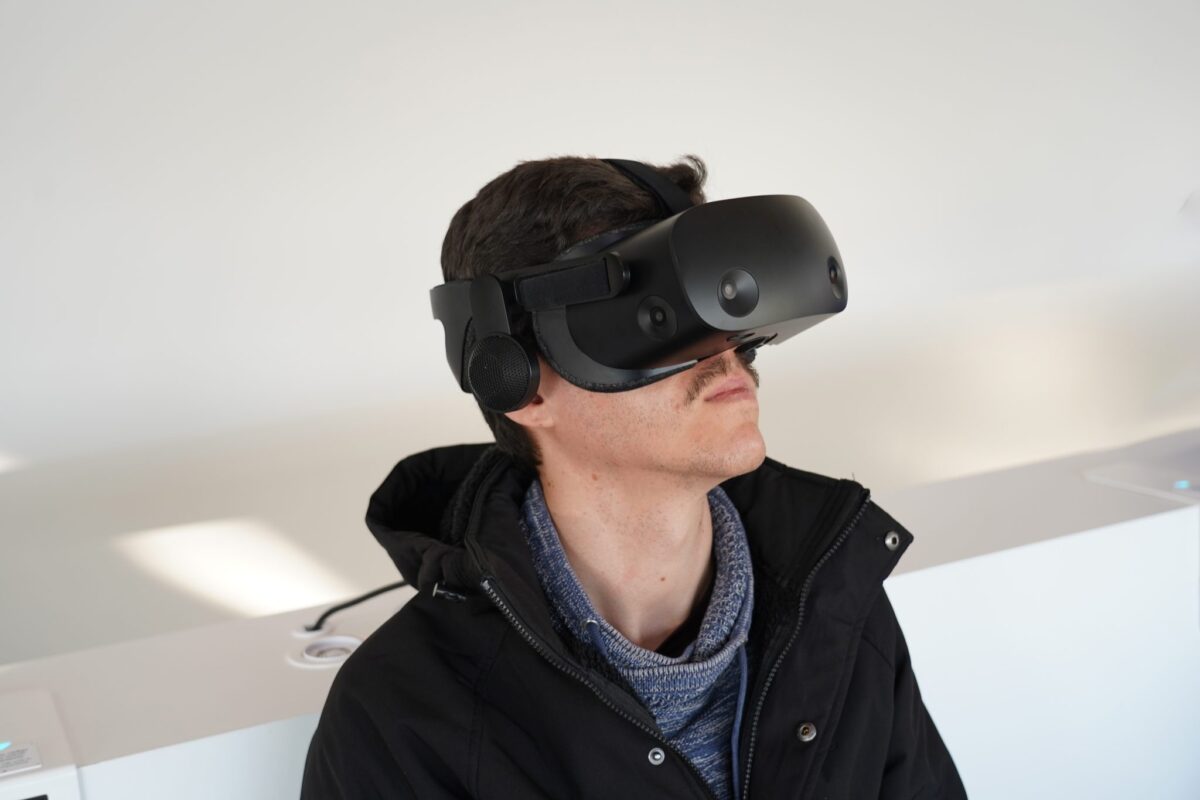
  • Meta VR Glasses: about 100 grams, a 5K micro-OLED display, eye tracking and hand gestures, up to three hours of continuous video playback, $1,299.99, due Spring 2027.
  • Ray-Ban Meta Audio: 43 grams, music, calls and AI voice features, 12 hours of battery plus 48 more from the case, from $349, shipping from 13 October.
  • Ray-Ban Meta Gen 3: up to nine hours of battery, a 12-megapixel camera with 3K video, from $449, available from 23 September.

Meta VR Glasses in detail

The design trade-off is that the glasses themselves stay light because the computing unit, battery and storage sit in a separate tethered module, according to the same report. Meta’s own wording stresses cinema-quality viewing, sports and work use. A battery life of up to three hours for video and a price above $1,200 will shape who buys the first generation. Rivals in the chip market are also moving fast; see our coverage of AMD’s trillion-dollar valuation and Nvidia’s open agent safety platform.

Where and when you can buy

Inven Global reports that Meta Ray-Ban Display went on sale in the UK and Canada on 23 September and reaches France, Italy and Germany on 13 October. New navigation features, including cycling directions and real-time public transit information, are rolling out in the United States and Canada, and South Korea has been added to the sales regions. Availability by country can change, so check the local store listing.

Muse and the claims to test

Meta calls Muse the world’s first personal AI agent built for everyone and says it will work with the glasses. It also announced a Meta Enterprise Platform and Muse for Small Business. These are company claims made at a product launch. Independent reviews of accuracy, privacy handling and battery life will matter more than the keynote. For a sense of how quickly AI product plans can change, read our report on the GPT-6.1 Astra cancellation.

Buyer questions

What did Meta announce at Connect 2026?

According to Meta’s newsroom, Meta VR Glasses weighing 100 grams, new Ray-Ban Meta Audio glasses, updates to Meta Ray-Ban Display, and Muse, which Meta calls a personal AI agent.

How much do the new glasses cost?

Inven Global reports Meta VR Glasses at $1,299.99 for a Spring 2027 release, Ray-Ban Meta Audio from $349 and Ray-Ban Meta Gen 3 from $449. Check Meta’s store for local pricing.

When can I buy Ray-Ban Meta Audio?

Inven Global reports pre-orders opened on 23 September with shipping from 13 October.

Where does Meta Ray-Ban Display sell?

Per Inven Global, sales began on 23 September in the UK and Canada, and start on 13 October in France, Italy and Germany. The report also says South Korea has been added to sales regions for the glasses lineup.

Is Muse proven?

Meta describes Muse as the world’s first personal AI agent built for everyone. That is the company’s own claim and has not been independently verified.

Britain’s PM Won’t Rule Out the Question That Divides His Party

UK Prime Minister Andy Burnham declined to rule out including a pledge to rejoin the European Union in Labour’s next election manifesto. He made the remark to reporters on September 22, while traveling to the United Nations General Assembly. It has reopened the UK rejoin EU debate at a moment when Burnham’s government is trying to project stability heading into this year’s Labour Party conference.

Reporters asked directly whether he could exclude an EU-rejoin commitment from the party’s platform. Burnham said the question was “for another day,” according to Euronews. He steered the conversation instead toward his government’s efforts to rebuild ties with Brussels through diplomatic channels already underway.

What Burnham actually said to reopen the UK rejoin EU debate

Burnham told reporters his “immediate priority” was to “build on the good work that Keir did in rebuilding bridges” with the EU. He wants to reach a “practical agreement that will further boost the British economy,” a reference to his predecessor’s efforts to repair post-Brexit relations. He stopped well short of endorsing a formal rejoin campaign. But his refusal to rule it out was enough to restart a debate many in his own party had hoped to leave behind.

The comments were notable given Burnham’s own history on the issue. He has previously spoken in favor of the UK rejoining the EU. He moderated that position during his leadership campaign earlier in 2026, telling supporters at the time that “the last thing we should do right now is rerun those arguments.”

European Union flags outside Brussels amid the UK rejoin EU debate

Why this is politically dangerous for Labour

Opposition leaders moved quickly to frame Burnham’s comments as a return to Brexit-era hostilities. Conservative leader Kemi Badenoch warned that Labour risked “restarting the Brexit wars.” Reform UK’s Richard Tice went further, calling a potential rejoin debate “a new Battle of Britain.”

Within Labour itself, senior figures have not been unanimous on how forcefully to raise the subject. Defence Secretary Wes Streeting has previously called Brexit “catastrophic,” reflecting a wing of the party more comfortable revisiting the question. Others have urged caution after Labour’s disappointing results in local elections in May 2026. Some in the party blamed those results partly on unresolved arguments over Britain’s relationship with Europe.

The Labour conference backdrop

CNN’s coverage of Labour’s party conference this week described Burnham as riding high politically, even as “tough choices” loom on multiple fronts. The EU question adds another difficult decision to that list. Raising it energizes a segment of Labour’s base that never accepted Brexit. But it also risks alienating voters in areas where opposition to EU membership remains strong.

What Burnham does next

Burnham has signaled that any substantive move on EU membership would follow, not precede, the outcome of ongoing UK-EU summit talks aimed at practical economic cooperation. That sequencing gives him room to defer a firm answer on the manifesto question for now. But the issue is unlikely to disappear before Labour finalizes its platform ahead of the next general election.

What it would take to actually rejoin

Even if Labour did commit to a rejoin pledge, the path back into the EU would be long. It would involve a fresh accession process, renewed negotiations over the terms of membership, and almost certainly another public vote, given how the original Brexit referendum was decided. None of that groundwork has begun. That is part of why Burnham’s critics argue raising the question now is premature at best. Even sympathetic voices within Labour have acknowledged that a rejoin campaign would consume years of political capital and diplomatic effort. The government is already juggling economic pressures and a demanding legislative agenda closer to home.

What the EU rejoin debate means — answered

Did Andy Burnham commit to rejoining the EU?

No. He declined to rule out a rejoin pledge in Labour’s next manifesto. But he stopped short of endorsing the idea, saying the question was “for another day.”

When did Burnham make these comments?

He spoke to reporters on September 22, 2026, while traveling to the United Nations General Assembly.

What has Burnham said about the EU in the past?

He previously supported the UK rejoining the EU. He moderated that stance during his 2026 leadership campaign, saying at the time that rerunning Brexit arguments was “the last thing we should do.”

How have opposition parties reacted?

Conservative leader Kemi Badenoch warned of “restarting the Brexit wars,” and Reform UK’s Richard Tice called a potential debate “a new Battle of Britain.”

Is Labour united on this issue?

No. Some senior figures, including Defence Secretary Wes Streeting, have previously called Brexit “catastrophic.” Others have urged caution after Labour’s setbacks in May 2026 local elections.

What would it actually take for the UK to rejoin the EU?

It would require a full accession process, fresh negotiations over membership terms, and very likely another public referendum, none of which has begun.

More on UK and EU relations

Where this reporting comes from

  • Euronews — British prime minister Burnham declines to rule out rejoining EU. euronews.com
  • CNN — Andy Burnham is on a high. When will he fall to earth? cnn.com